

Biometric Identity Verification: Enhancing Security and Convenience
In a digital era defined by rapid advancements in technology and an ever-increasing threat landscape, traditional methods of identity authentication are no longer sufficient. Biometric identity verification has emerged as a powerful solution, combining unmatched accuracy, user convenience, and robust security to protect sensitive data and prevent identity fraud.
This page explores how biometric identity verification is reshaping industries, enhancing both customer experience and security protocols. Whether you’re in finance, healthcare, e-commerce, or government services, adopting biometric technology can revolutionize how your organization authenticates users.
What is Biometric Identity Verification?
Biometric identity verification is a security process that uses unique biological characteristics—such as fingerprints, facial features, iris patterns, or voice recognition—to confirm an individual’s identity. Unlike passwords or PINs, biometrics are inherently linked to the person and nearly impossible to forge, making them ideal for secure authentication.
The process typically involves three key steps:
- Enrollment – The user’s biometric data is captured and stored in a secure database.
- Liveness Detection – During authentication, real-time biometric input is captured and verified to prevent spoofing attacks.
- Matching and Verification – The captured data is compared to the stored template to validate identity.
Why Businesses are Embracing Biometric Identity Verification
Organizations across all sectors are rapidly integrating biometric solutions into their operations. Here’s why:
1.Superior Security
Biometric identifiers are extremely difficult to replicate. This makes biometric identity verification one of the most secure methods of access control, significantly reducing the risk of identity theft, phishing, and data breaches.
2. Seamless User Experience
Forget complex passwords and two-factor authentication delays. Biometric verification allows for frictionless login processes, faster onboarding, and instant access—all while maintaining high security standards.
3. Regulatory Compliance
With increasing regulations such as GDPR, HIPAA, and KYC norms, biometric systems help ensure compliance by offering traceable and auditable authentication processes.
4. Cost Efficiency
While initial implementation may require investment, biometric verification reduces long-term costs by minimizing fraud, streamlining support (no password resets), and enhancing operational efficiency.
Applications of Biometric Identity Verification
Biometric identity verification isn’t limited to a single industry. Here’s how various sectors are leveraging it:
Banking & Finance
-
Secure mobile banking logins
-
Biometric-enabled ATMs
-
KYC verification for new accounts
Healthcare
-
Patient identification at check-in
-
Secure access to medical records
-
Prescription verification to prevent fraud
Government Services
-
National ID and e-passports
-
Voter verification
-
Border control and immigration
Retail & E-commerce
-
Identity authentication for high-value transactions
-
Age verification for restricted products
-
Fraud prevention in online payments
Enterprise & Workplace Security
-
Access control to sensitive facilities
-
Employee attendance tracking
-
Identity verification in remote work scenarios
Types of Biometric Technologies in Use
Understanding the types of biometrics can help you determine which is best for your business needs.
Facial Recognition
Ideal for contactless authentication, facial recognition systems scan unique facial features. It’s widely used in smartphones, airports, and secure facilities.
Fingerprint Scanning
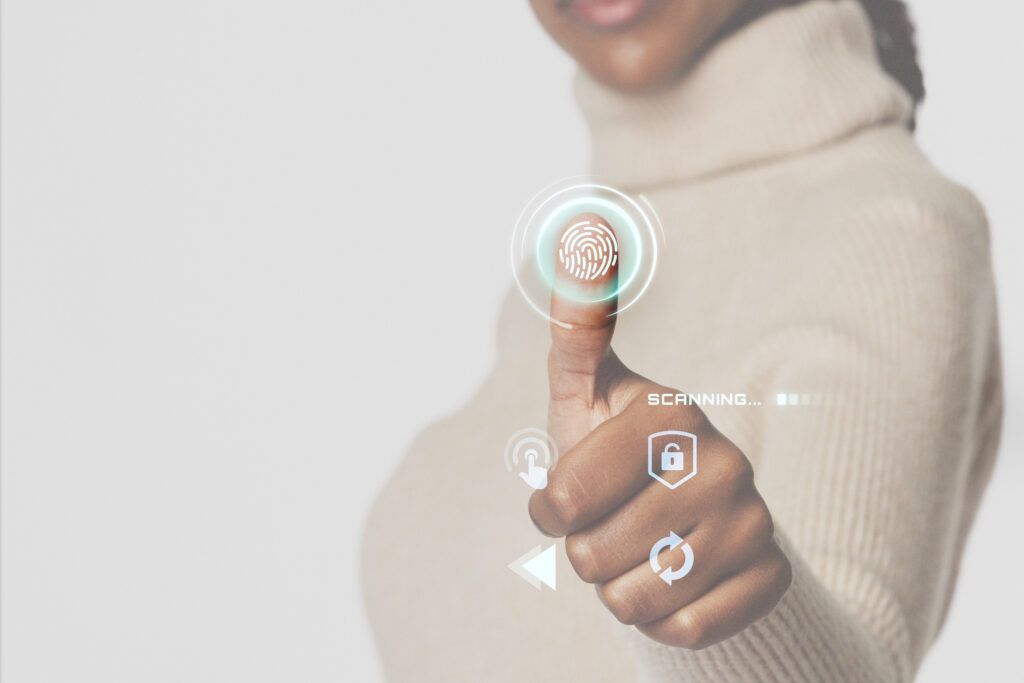
A well-established method, fingerprint recognition is fast and reliable. It’s commonly used in mobile devices, biometric time clocks, and door access systems.
Iris and Retina Scanning
Highly secure and used in high-stakes environments, iris scanning reads patterns in the colored part of the eye, while retina scans detect blood vessels in the eye.
Voice Recognition
Useful in call centers and mobile apps, voice biometrics authenticate users based on unique vocal patterns.
Behavioral Biometrics
This emerging field assesses patterns like typing speed, mouse movement, or gait to detect anomalies and prevent unauthorized access.
Key Benefits of Biometric Identity Verification
Let’s break down the primary benefits businesses gain from deploying biometric verification systems:
-
Accuracy: Minimizes false positives and false negatives with high precision.
-
Speed: Enables instant verification without user frustration.
-
Convenience: Users don’t need to remember passwords or carry tokens.
-
Non-Repudiation: Creates verifiable proof of identity for accountability.
-
Scalability: Easily adaptable across devices, locations, and user volumes.
Challenges and Considerations
Although biometric identity verification offers substantial advantages, implementation should be thoughtful:
-
Data Privacy: Collecting biometric data demands strict data handling practices and compliance with privacy laws.
-
Spoofing Risks: Without liveness detection, systems could be tricked with photos or recordings.
-
Hardware Requirements: Specialized sensors or cameras may be required, depending on the biometric modality.
-
User Consent: Biometric use must be transparent, with user consent and clear privacy policies.
By partnering with a trusted biometric solutions provider, these challenges can be effectively addressed while ensuring optimal ROI.
Is Biometric Identity Verification Right for Your Business?
If your organization handles sensitive data, manages a large user base, or operates in a fraud-prone industry, biometric identity verification can be a game-changer. It not only strengthens your security framework but also boosts customer trust and brand credibility.
Businesses that integrate biometrics now will gain a competitive edge by future-proofing their authentication processes.

